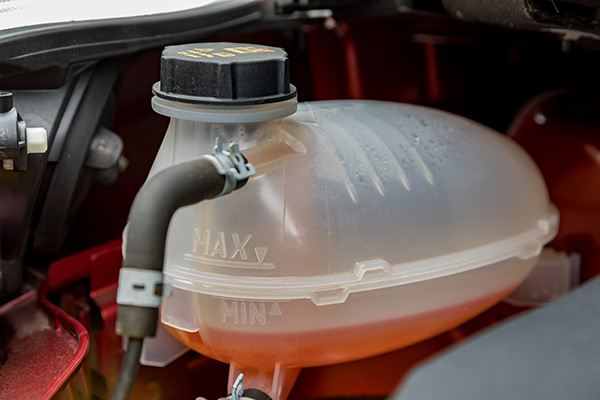
Low coolant may look like a small issue until the engine starts paying the price for it. The car still runs, the warning light may come and go, and a lot of drivers assume they can top it off later and keep moving. That is where the trouble starts.
Coolant is one of the main things keeping engine temperature under control every minute the vehicle is running.
Why Low Coolant Escalates So Quickly
Your cooling system is designed to move heat away from the engine, send it through the radiator, and keep temperatures stable under load. Once the coolant level drops, that system loses efficiency fast. The engine does not have the same reserve it had before, so temperatures rise sooner, and hot spots develop much faster.
That is why low coolant is not a wait-and-see issue. A small leak, a weak hose, a failing water pump, or a pressure loss somewhere in the system will keep pushing the coolant level down until the engine has no protection left. By the time the gauge climbs, the problem is already well underway.
What Low Coolant Does Inside The Engine
When the coolant level is low, the engine no longer heats evenly. Some sections run much hotter than others, putting extra stress on gaskets, seals, and metal surfaces that were designed to operate within a controlled temperature range. That uneven heat is what turns a simple fluid loss problem into a much bigger engine repair.
The cylinder head is usually the first to fail because it reacts quickly to excess heat. If temperatures rise too far, the head can warp, sealing surfaces can weaken, and the head gasket can fail. Once that happens, coolant loss is no longer the only problem. Now you are dealing with internal engine damage, rough running, and a much more expensive repair path.
The Warning Signs Usually Show Up Before A Breakdown
Most vehicles give a few clues before low coolant levels turn into full-blown overheating. The temperature gauge may start creeping higher in traffic. The heater may stop blowing warm air consistently. You may smell coolant, notice steam, or see the coolant reservoir dropping lower than it should between visits.
Those signs should not be ignored just because the car still drives. A vehicle with low coolant can stay usable right up until the moment it does not. An early inspection is the best time to catch the leak source before overheating leaves damage behind.
Why Topping It Off Is Not A Real Fix
Adding coolant may buy a little time, though it does not solve why the level dropped in the first place. Coolant does not simply disappear. If the system is low, it is leaking externally, losing pressure, or, in some cases, leaking internally through a more serious engine problem.
This is where drivers end up spending more than they needed to. They keep refilling the reservoir and hoping the level holds. Meanwhile, the leak keeps growing, the cooling system keeps falling behind, and the engine keeps overheating. Treating low coolant like a temporary inconvenience is how a hose repair turns into a head gasket job.
What Keeps A Small Cooling Problem From Turning Into Engine Damage
The best move is to deal with coolant loss while the problem is still focused. A cooling system pressure test, leak check, and temperature check will usually show whether the source is a hose, radiator, thermostat housing, water pump, or something deeper. Finding that source early is what keeps the repair from spreading into the rest of the engine.
This is one of those areas where regular maintenance pays off in a very direct way. Many low coolant issues begin as small leaks or early wear that could have been detected before the coolant level dropped enough to pose a real risk. Once the warning signs are there, the engine is already asking for help.
Get Low Coolant Inspection And Cooling System Repair In Gambrills, MD, With Goss' Garage II
If your coolant level keeps dropping or your temperature gauge has started acting differently, Goss' Garage II in Gambrills, MD, can perform a cooling system inspection, identify the cause, and fix it before low coolant levels turn into overheating and engine damage.
Bring it in before a small cooling system problem becomes a much bigger repair.