Posted on 9/25/2026

A used car can look clean, drive quietly, and still have a list of things waiting underneath. Tires may be worn on the inner edges. A ball joint can have play without making noise yet. Brake lines can be rusty in places you won’t see from the driveway. Maryland’s safety inspection is meant to catch safety-related problems before a used vehicle is titled and registered, but buyers still need to think about timing. The best time to sort out the inspection is before the sale gets complicated, not after you’ve already paid and discovered the car needs several repairs. Find Out Whether the Car Already Has a Valid Maryland Inspection Before agreeing to the deal, ask whether the vehicle has already passed a Maryland safety inspection and when it did. The state requires applicable used vehicles to pass before they can be titled and registered, and a passing certificate is valid for 90 days. Don’t settle for somebody saying the car passed recently. A ... read more
Posted on 8/28/2026
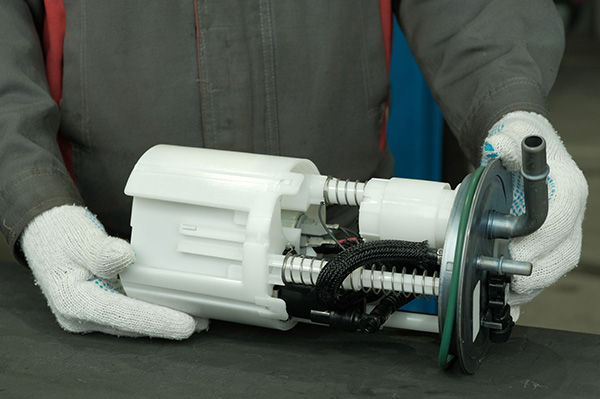
A fuel gauge that stays on full for too long, drops suddenly, or reads empty shortly after a fill-up can make every drive less predictable. The difficult part is that the component you see on the dashboard is only the last step in a system that begins inside the fuel tank. The sending unit, wiring, instrument cluster, control modules, and gauge display all have to agree before the reading makes sense. When they don't, the gauge's behavior can offer clues, but testing is usually needed to separate an in-tank problem from an electrical or display issue. What the Fuel Sending Unit Does The fuel sending unit measures how much fuel is in the tank. A common design uses a float attached to an arm that moves across a variable resistor as the fuel level changes. That changing resistance becomes the signal the vehicle uses to determine fuel level. On many vehicles, th ... read more
Posted on 7/31/2026
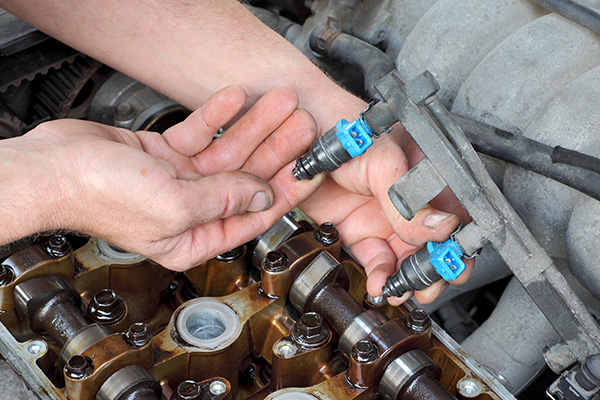
We spend a lot of time checking on the big, obvious components under the hood. It is easy to notice when a battery dies, a belt squeals, or a radiator hose starts spraying bright green fluid all over the driveway. Those are the loud, dramatic car problems that demand your immediate attention. But some of the most frustrating performance issues stem from components that are barely larger than a standard ballpoint pen. At our shop, we talk to drivers every day who complain that their vehicle has simply lost its old spunk. They tell us the car feels lazy when merging onto the highway, shakes uncomfortably when sitting at a red light, or is suddenly chugging gas. When we hook up our diagnostic equipment, the culprit often turns out to be a set of dirty fuel injectors. Let us take a look at what these tiny marvels actually do, why modern cars make them get dirty faster than older models, and how a microscopic bit of carbon can ruin your daily drive. The Anatomy of the Perfect Mist ... read more
Posted on 6/26/2026

Summer driving looks easy from the outside. The roads are clear, the days are longer, and there is no ice to scrape off the windshield. But from our side of the shop, summer can be one of the toughest seasons for a vehicle. Heat, traffic, road trips, extra A/C use, and hot pavement all put more stress on your car than a lot of drivers realize. That is why summer car care matters. A vehicle that seems perfectly fine in mild weather can start showing weak spots once temperatures climb. Tires run hotter. Batteries wear out faster. Cooling systems have to work harder. Air conditioning gets pushed to the limit. And small issues that were easy to ignore in spring can turn into bigger headaches by mid-summer. The good news is that summer maintenance does not have to be complicated. A few smart checks and good habits can make a huge difference in how your car handles the hottest months of the year. Watch Your Tires Closely If there is one place we always tell drivers to st ... read more
Posted on 5/29/2026

A Toyota can make neglect feel harmless for a while. The engine starts, the ride feels normal, and the dashboard stays quiet. That is part of why so many Toyota owners wait longer than they should before having their cars serviced. Reliable does not mean maintenance-proof. An experienced Toyota mechanic knows where these vehicles tend to wear, leak, or act up as the miles climb. The goal is not to replace parts early. It is to catch the small signs that tell you what the vehicle will need next. Toyota Service Starts With Knowing The Model Toyota builds dependable vehicles, but a Corolla, Camry, Tacoma, Highlander, Prius, Sienna, and 4Runner do not all need the same kind of attention. Each model has its own service patterns, mileage concerns, and driving habits that affect wear. A Tacoma used for towing or job-site driving lives a different life than a Camry used for commuting. A Prius has hybrid components and regenerative braking to consider. A 4Runner may see ro ... read more